The French Quarter Junk Journal Pages: A Creative Toolkit
There’s a certain texture to the French Quarter—wrought-iron balconies, faded posters, handwritten letters, and the layered history of a city that doesn’t hide its age. That’s the feeling captured in The French Quarter Junk Journal Pages, a printable set designed for creators who want their projects to carry a sense of story and place. This isn’t just a collection of backgrounds; it’s a versatile design asset for anyone working in journaling, scrapbooking, collage, mixed media, or digital design.
What You’re Working With
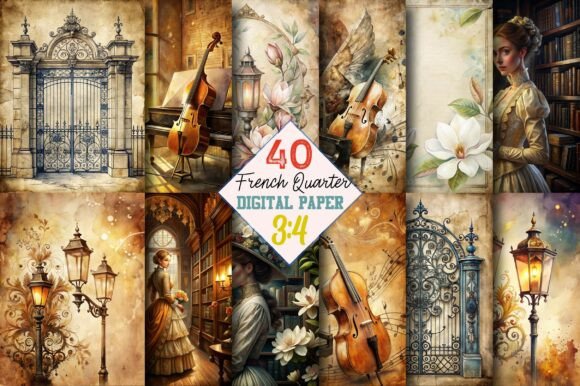
Inside the ZIP file, you’ll find high-quality JPEG files sized at 3:4 with 300 DPI resolution. That means these pages are built for both digital use and print projects where crisp detail matters. The set offers a range of textures, patterns, and illustrated elements inspired by New Orleans’ iconic aesthetic—think vintage typography, botanical sketches, aged paper effects, and subtle grunge textures. Each page has its own personality, but they all share a cohesive, handcrafted feel that works across multiple creative contexts.
As a digital product with instant download, you can start using these pages immediately. There’s no waiting for shipping, no physical inventory to manage. For designers, entrepreneurs, and content creators, that kind of accessibility matters when deadlines are real and inspiration strikes unexpectedly.
Where These Pages Fit Naturally
The strength of The French Quarter Junk Journal Pages lies in their adaptability. They’re not locked into one style or one use case. Here’s where they tend to work best:
Journaling and Scrapbooking
For personal projects, these pages bring warmth and character to memory books, travel journals, and everyday scrapbooks. The vintage-inspired textures add depth without overwhelming photos or handwritten notes. They layer well with washi tape, stickers, and other physical embellishments if you’re printing them out for a traditional junk journal.
Digital Collage and Mixed Media
Artists working in digital collage will appreciate the variety of textures and visual elements. The pages can be torn, cropped, blended, and combined in software like Photoshop or Procreate. The 300 DPI resolution ensures that even when you zoom in for detailed work, the quality holds up.
Branding and Marketing Materials
Small business owners and marketers often struggle to find design assets that feel authentic rather than generic. These pages work well as backgrounds for social media graphics, email headers, and website banners—especially for brands in the lifestyle, food, travel, or handmade goods space. The French Quarter aesthetic carries a sense of heritage and craftsmanship that can elevate a brand’s visual identity without feeling overly polished or corporate.
Editorial and Publishing Projects
Bloggers, publishers, and content creators working on digital magazines, zines, or e-books can use these pages as chapter dividers, cover backgrounds, or decorative elements. The 3:4 aspect ratio is convenient for portrait-oriented layouts, and the variety of designs means you won’t repeat the same look across multiple pages.
Packaging and Product Design
For entrepreneurs selling physical products—think artisan goods, candles, stationery, or specialty foods—these pages can inspire packaging concepts. Printed on cardstock, they work as product tags, wrapping paper accents, or box liner patterns. The vintage feel aligns well with brands that emphasize authenticity and small-batch quality.
Working With Texture and Visual Hierarchy
One thing worth noting: these pages are rich in visual detail. That’s a strength, but it also means you’ll want to think carefully about how you layer text and other design elements on top of them. A busy background can compete with your message if you’re not intentional about contrast and spacing.
When using The French Quarter Junk Journal Pages as backgrounds for typography-driven designs—like social media quotes, event invitations, or product labels—consider adding a semi-transparent overlay or a solid text box to ensure readability. Pairing these textured backgrounds with clean, modern typography (a simple sans serif font or a straightforward serif font) often creates the right balance. The background provides personality; the type provides clarity.
For projects where the pages themselves are the focus—like a junk journal or a collage art piece—you have more freedom to let the textures dominate. In those cases, handwritten fonts or script fonts can complement the organic, layered feel of the designs.
Practical Considerations for Your Projects
Before you start downloading and printing, a few practical notes:
- File format: These are JPEG files, which are universally compatible with design software, printers, and online platforms. No special plugins or tools required.
- Resolution: At 300 DPI, the pages are print-ready. If you’re using them digitally at screen resolution (72 DPI), they’ll look sharp and load quickly.
- Aspect ratio: The 3:4 ratio works well for standard journal sizes, portrait-oriented social media posts, and many print formats. If you need a different ratio, you can crop without losing much of the design.
- Color considerations: The palette leans warm and earthy—muted golds, deep greens, faded reds, and weathered neutrals. Keep this in mind if your project has a specific color story. These pages will harmonize with similar tones and may clash with very bright, saturated palettes.
Making It Your Own
The best creative assets are the ones that serve as a starting point, not a finished product. The French Quarter Junk Journal Pages give you a strong visual foundation, but the real value comes from how you adapt them. Crop a detail from one page for a logo element. Blend two pages together for a unique texture. Print a set on different paper stocks and see how the ink interacts with the surface.
For designers and creators who work across multiple formats—digital and print, personal and commercial—having a cohesive set like this saves time and keeps your work visually consistent. Instead of hunting for individual textures that may or may not work together, you start with a curated collection that shares a common aesthetic language.
Whether you’re building a brand identity, designing a scrapbook for a friend, or creating content that needs to stand out in a crowded feed, these pages offer a practical, versatile resource. The French Quarter aesthetic isn’t just decorative—it carries a sense of time, place, and craft that resonates with audiences who value authenticity over perfection.